VHB Tape Selection Guide: How to Choose for Metal vs. Plastic Surfaces
In modern industrial manufacturing, VHB (Very High Bonding) tape has become the ideal alternative to traditional mechanical fastening methods (such as screws, rivets, and welding) due to its exceptional bonding strength, durability, and design flexibility. However, with a wide variety of metal and plastic materials available, choosing the right VHB tape to ensure optimal bonding performance remains a challenge for many engineers and designers. This article will delve into the selection strategies for VHB tape when bonding metal and plastic surfaces.
Understanding Surface Characteristics: The Foundation of Successful Bonding
The bonding performance of VHB tape is closely related to the surface characteristics of the substrates, with the most critical factor being surface energy. Surface energy determines how well the adhesive wets the material surface, which directly impacts bonding strength.
1. Metal Surfaces
Most metals, such as stainless steel, aluminum, copper, and zinc, are High Surface Energy (HSE) materials. This means their surfaces are easily wetted by adhesives, typically forming a strong bond with VHB tape. However, metal surfaces may have oxidation layers, oil, dust, or fingerprints, which can severely compromise the bond. Therefore, proper cleaning and surface preparation of metals are crucial.
2. Plastic Surfaces
The surface energy of plastic materials varies significantly and can be divided into high surface energy and low surface energy plastics:
•High Surface Energy (HSE) Plastics: Examples include ABS, Polycarbonate (PC), PMMA (Acrylic), and Nylon. These plastics have relatively high surface energy and generally bond well with VHB tape, similar to metal surfaces.
•Low Surface Energy (LSE) Plastics: Examples include Polypropylene (PP), Polyethylene (PE), Polyoxymethylene (POM), and Polytetrafluoroethylene (PTFE). These plastics have low surface energy, making it difficult for the tape to wet the surface adequately, resulting in weaker bond strength. For these materials, it is necessary to select VHB tapes specifically designed for LSE surfaces or apply special surface treatments.
VHB Tape Bonding Principles and Selection Considerations
The core of VHB tape lies in its unique closed-cell acrylic foam structure and high-performance acrylic adhesive. This structure provides excellent viscoelasticity, allowing it to effectively dissipate stress and accommodate the thermal expansion and contraction of different materials .
When selecting a tape, in addition to surface energy, the following factors must be considered:
•Application Environment: Does the application require resistance to high temperatures, low temperatures, moisture, chemicals, or UV light?
•Bonding Strength Requirements: Choose the appropriate thickness and bonding strength of the VHB tape model based on actual load-bearing and stress conditions.
•Substrate Compatibility: Certain special materials (e.g., plastics containing plasticizers, copper, and copper-containing metals) may require specific tape formulations or surface treatments .
•Color and Transparency: Select clear, gray, or black tape based on aesthetic requirements.
Selection Recommendations and Surface Preparation
The following table summarizes the selection recommendations and common surface preparation methods for VHB tape on different material surfaces:
Substrate Type | Surface Energy | Common Examples | VHB Tape Selection Recommendation | Recommended Surface Preparation |
Metal | High Surface Energy | Stainless steel, aluminum, copper, galvanized steel | General-purpose VHB tape (e.g., 5952 series, 4959 series) | Clean (IPA/industrial alcohol), abrade (to remove oxidation), primer (e.g., 3M Primer 94 for special metals like copper) |
HSE Plastics | High Surface Energy | ABS, PC, PMMA, Nylon | General-purpose VHB tape (e.g., 5952 series, 4959 series) | Clean (IPA/industrial alcohol) |
LSE Plastics | Low Surface Energy | PP, PE, POM, PTFE | VHB tape designed for LSE surfaces (e.g., LSE series) | Clean (IPA/industrial alcohol), corona treatment, flame treatment, primer (e.g., 3M Primer 94) |
Special Materials | Varies | Glass, powder coatings, plasticized plastics | Consult supplier for specific models or treatments | Clean, primer, or specific activation treatment |
The Importance of Surface Preparation
Regardless of the material, thorough surface cleaning is the critical first step to ensure VHB tape performs at its best. It is generally recommended to wipe the surface with Isopropyl Alcohol (IPA) or industrial alcohol to remove oil, dust, and fingerprints. For low surface energy plastics, using a primer (such as 3M Primer 94) can effectively increase surface energy and enhance the tape's adhesion .
Application Conditions
The optimal application temperature for VHB tape is typically between 21°C and 38°C (70°F to 100°F). When applying in low-temperature environments, it may be necessary to preheat the tape and the bonding surfaces to ensure initial bond strength . Additionally, applying sufficient pressure (e.g., using a roller) helps the tape make full contact with the surface, improving the final bond.
Specific Application Example: Nameplate Bonding
For applications like bonding nameplates to plastic surfaces, a two-step process is often recommended to ensure optimal adhesion and a clean finish:
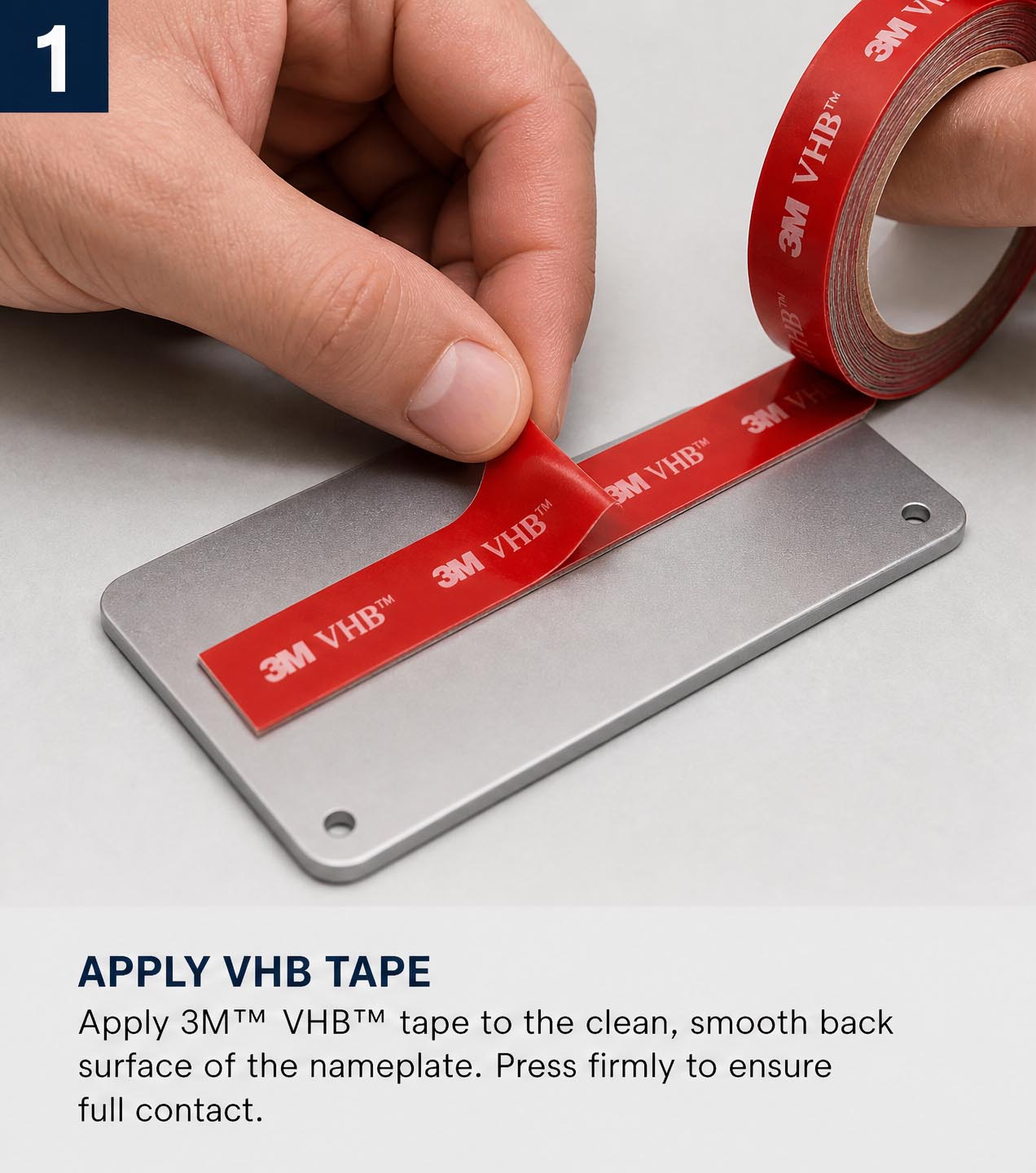
1.Apply VHB Tape to Nameplate: First, carefully apply the VHB tape to the smooth, clean back surface of the nameplate. Ensure even pressure is applied across the entire tape area to maximize contact. This step allows for precise positioning of the tape on the nameplate before final assembly.
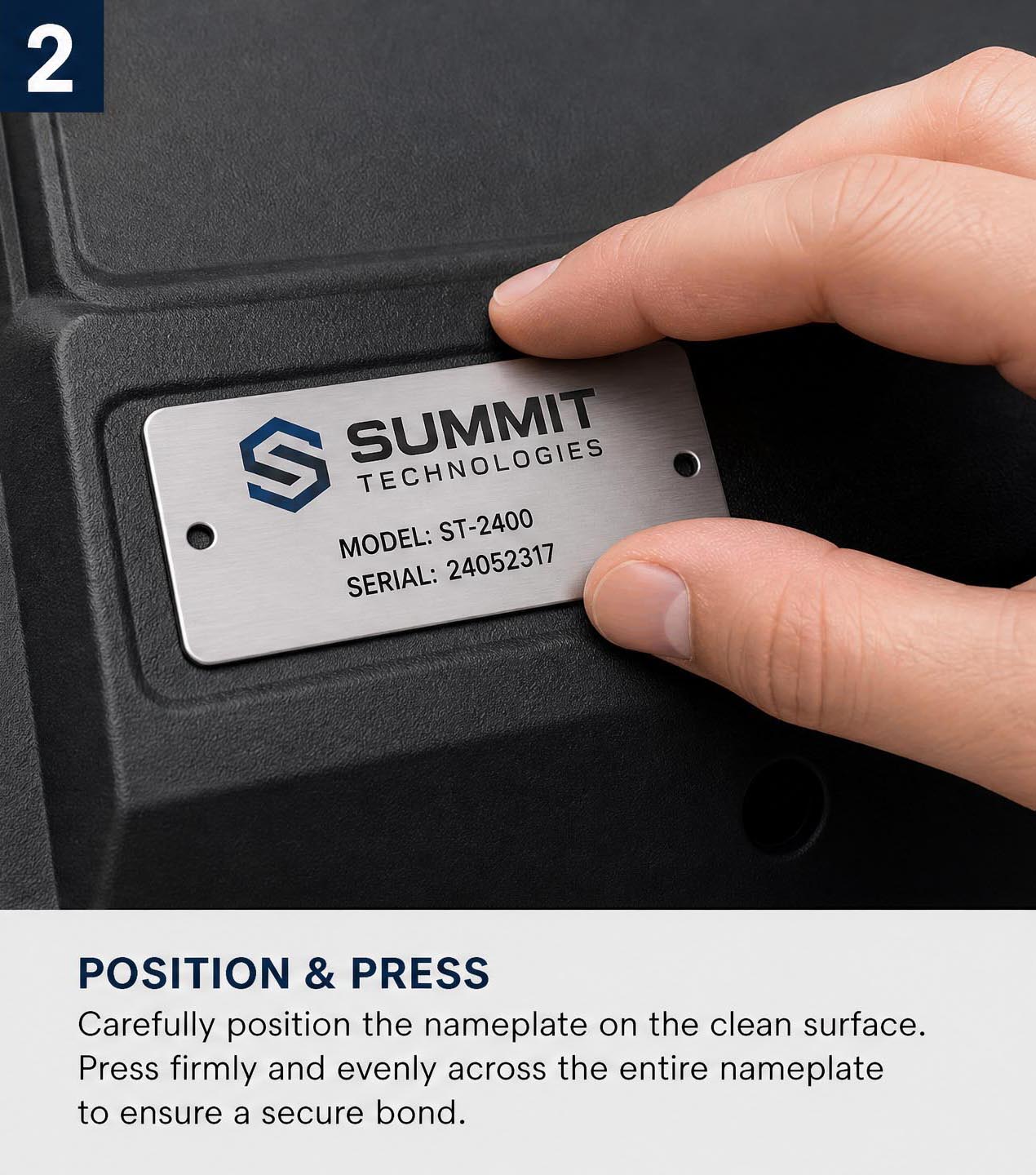
2.Bond Nameplate to Plastic Surface: Once the tape is securely attached to the nameplate, remove the liner from the VHB tape. Then, carefully position the nameplate onto the prepared plastic surface and apply firm, even pressure. Using a roller can help achieve full contact and enhance the bond strength.
This method minimizes handling of the exposed adhesive and ensures a strong, durable bond for the nameplate.
Conclusion
Correctly selecting and applying VHB tape can bring immense flexibility and reliability to product design. By deeply understanding the surface characteristics of the substrates and combining them with the performance features of VHB tape, you can find the most suitable bonding solution for your application, achieving more efficient and durable connections. If you have any questions, it is recommended to consult a professional adhesive supplier for detailed technical support and product recommendations.